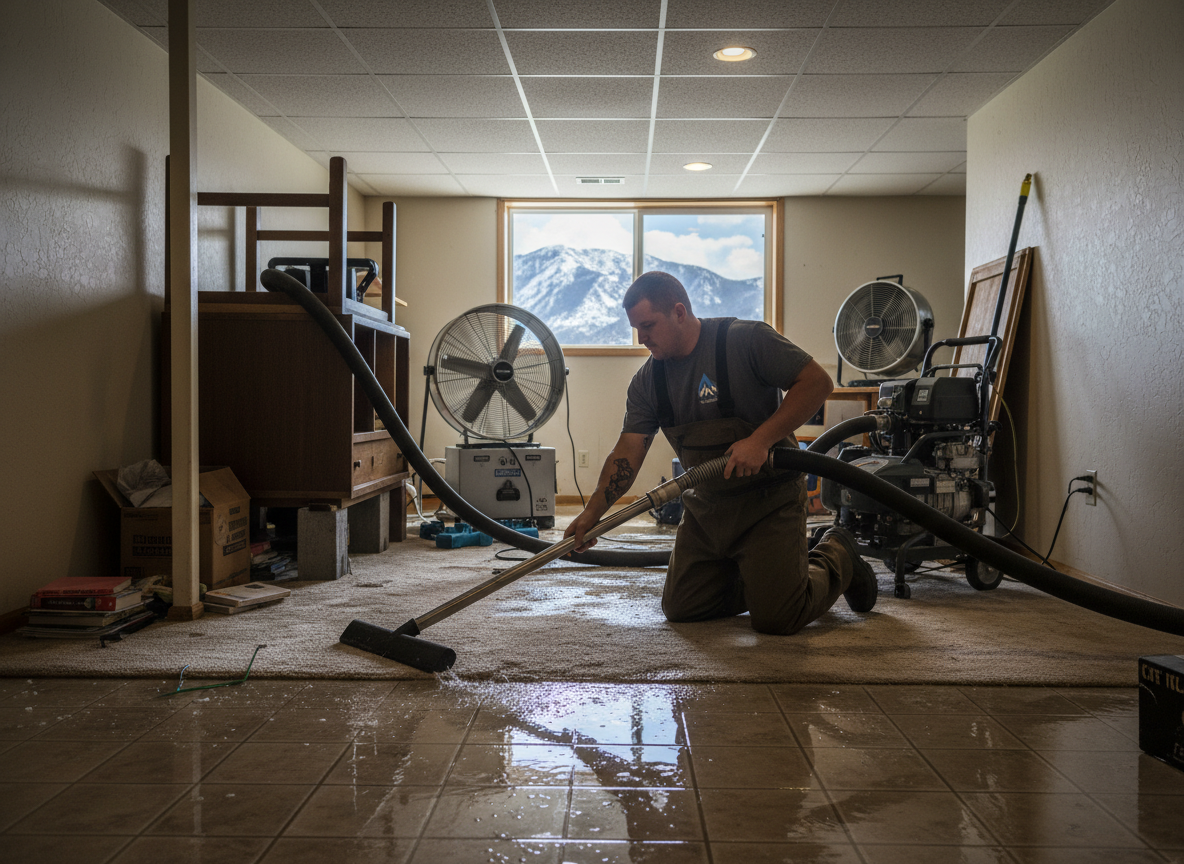
Cove at Red Ledges sits on the east bench above Heber City with homes built into sloping terrain that drains toward the valley floor. Winter snow loads on roofs and north-facing walkouts often push water into basements when melt hits the compacted gravel driveways common here. Farshore Initiative keeps trucks staged at 150 N Main St so crews reach Cove Circle or Red Ledges Parkway within minutes once a call comes in at any hour.
Newer construction in the Cove features larger footprints and finished lower levels that sit close to natural drainage swales feeding into the golf course ponds. Spring runoff and sudden summer storms both test the French drains and sump systems that many homeowners installed during build-out. Our teams know which streets lose shoulder access first after a heavy snow and plan equipment staging accordingly.
Because the neighborhood sits between Midway and the Jordanelle shoreline, we see a mix of full-time residences and second homes whose owners need fast coordination when a pipe bursts while the house is empty. We map every call to the specific lot grade and access gate so extraction and drying start the same day.
Around Cove at Red Ledges
We regularly work near:
- 📍Red Ledges Golf Club
- 📍Red Ledges Parkway
- 📍Cove Circle
- 📍Red Ledges Trailhead
- 📍The Preserve at Red Ledges entrance
- 📍Jordanelle State Park boundary
Water Damage Restoration in Cove at Red Ledges — Local Notes
- •Sloped lots and walkout basements on the north side of Red Ledges Parkway collect snowmelt that funnels against foundation walls; we often pull carpet and baseboards first on these lower levels.
- •Gated entries and narrow private roads limit truck access after heavy snow; smaller extraction units and extra hose runs are standard for homes past the second gate.
- •Many homes back onto Red Ledges Golf Club fairways where irrigation lines run close to property boundaries, creating cross-contamination risks during any water event.
- •Winter ice dams form quickly on the metal roofs common in the Cove; we stage roof tarps and heated air movers on site before temperatures drop again overnight.