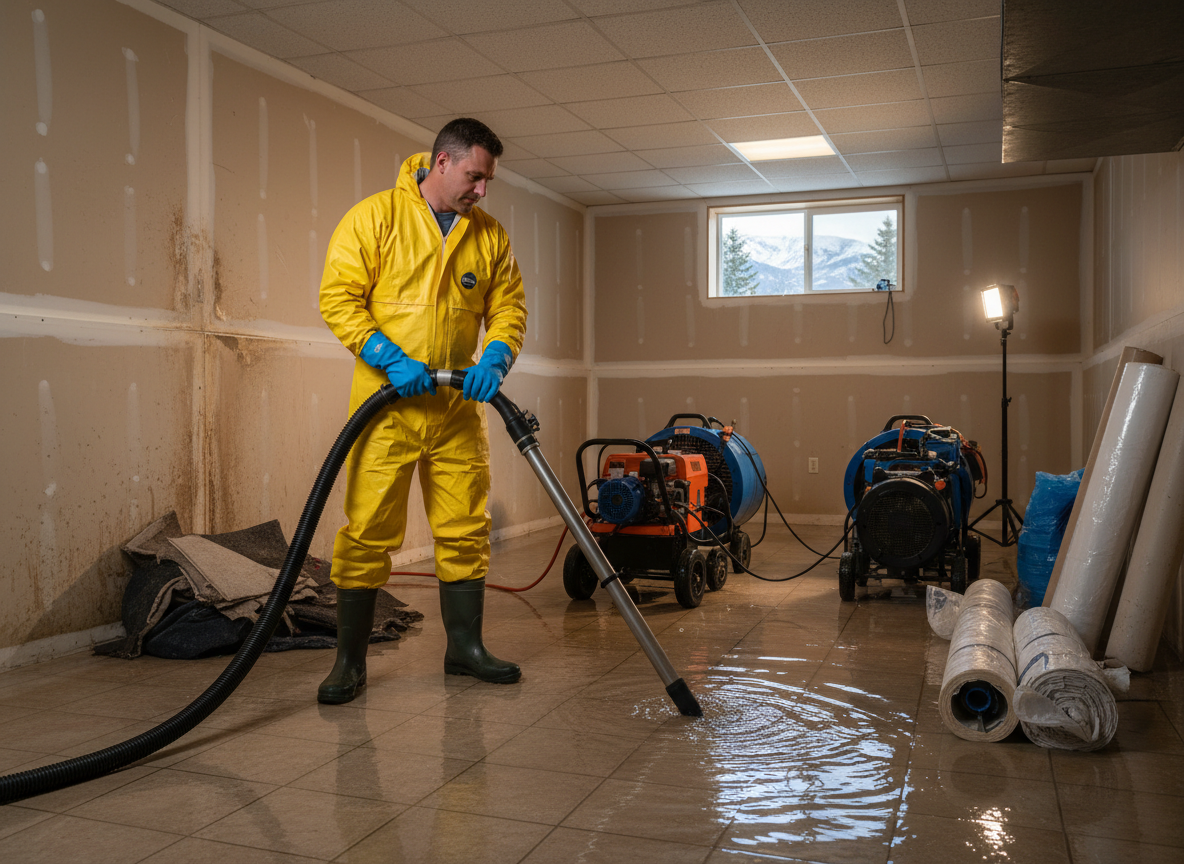
In Wasatch County the biggest driver of emergency water calls is rapid snowmelt combined with older plumbing in Downtown Heber City homes built before modern freeze protection. Water travels fast along the sloped lots near the Heber Valley Railroad tracks and pools under crawl spaces that lack vapor barriers. Technicians must pull baseboards early and use moisture meters on lath-and-plaster walls because hidden saturation behind horsehair plaster leads to mold within 48 hours once temperatures swing from freezing nights to warm afternoons.
Lake Creek and North Village properties sit closer to Jordanelle State Park runoff channels. When heavy spring rain hits already saturated soil, water backs up through floor drains and sump pits that were never sized for the mountain watershed. Extraction crews stage dehumidifiers on the main level while running air movers into every joist bay; skipping the subfloor drying step is the most common reason callbacks happen here. Homes near Midway and Park City often have finished basements with carpet over concrete, requiring separate perimeter drying so the slab does not wick moisture back into the living space.
Wasatch County building practices from the 1970s and 80s left many North Village houses with cast-iron waste lines that crack when the ground heaves during freeze-thaw cycles. Emergency crews carry infrared cameras on every call because water following the slope of a lot can travel thirty feet under the slab before surfacing in a different room. Documenting every affected room with photos and meter readings protects both the homeowner and the restoration crew when insurance adjusters arrive from Salt Lake.
Technician insight
In Heber City the thing that catches most people out with Emergency Water Cleanup is the way snowmelt travels under the slab on north-facing lots in North Village. Older homes there have no perimeter drain, so water from a single burst pipe can saturate joist bays two rooms away before anyone notices. If you only dry the obvious wet spot you will be back in two weeks when the floor starts cupping.
Snowmelt Backup in North Village
A March warm spell sent heavy runoff into a North Village crawl space. Water entered through a cracked cast-iron cleanout and wicked into the subfloor under the kitchen. Crews extracted standing water, placed drying equipment in the joist bays, and returned daily until meter readings matched unaffected areas, preventing mold growth before the next freeze.
How it works
- 1
Arrival and Safety
Technician arrives within the hour, shuts off water if still flowing, and sets up containment to protect unaffected rooms from cross-contamination.
- 2
Water Extraction
Truck-mounted and portable pumps remove standing water from floors, carpets, and affected cavities while crews document water depth and source.
- 3
Moisture Mapping
Infrared and pin meters locate hidden moisture in walls, subfloors, and insulation throughout the structure.
- 4
Drying and Monitoring
Air movers, dehumidifiers, and heaters run on a 24-hour cycle with daily meter checks until readings return to pre-loss levels.
Pricing
Cost depends on volume of water, number of affected rooms, and whether hardwood or plaster requires extra drying time; upfront quotes provided on site.