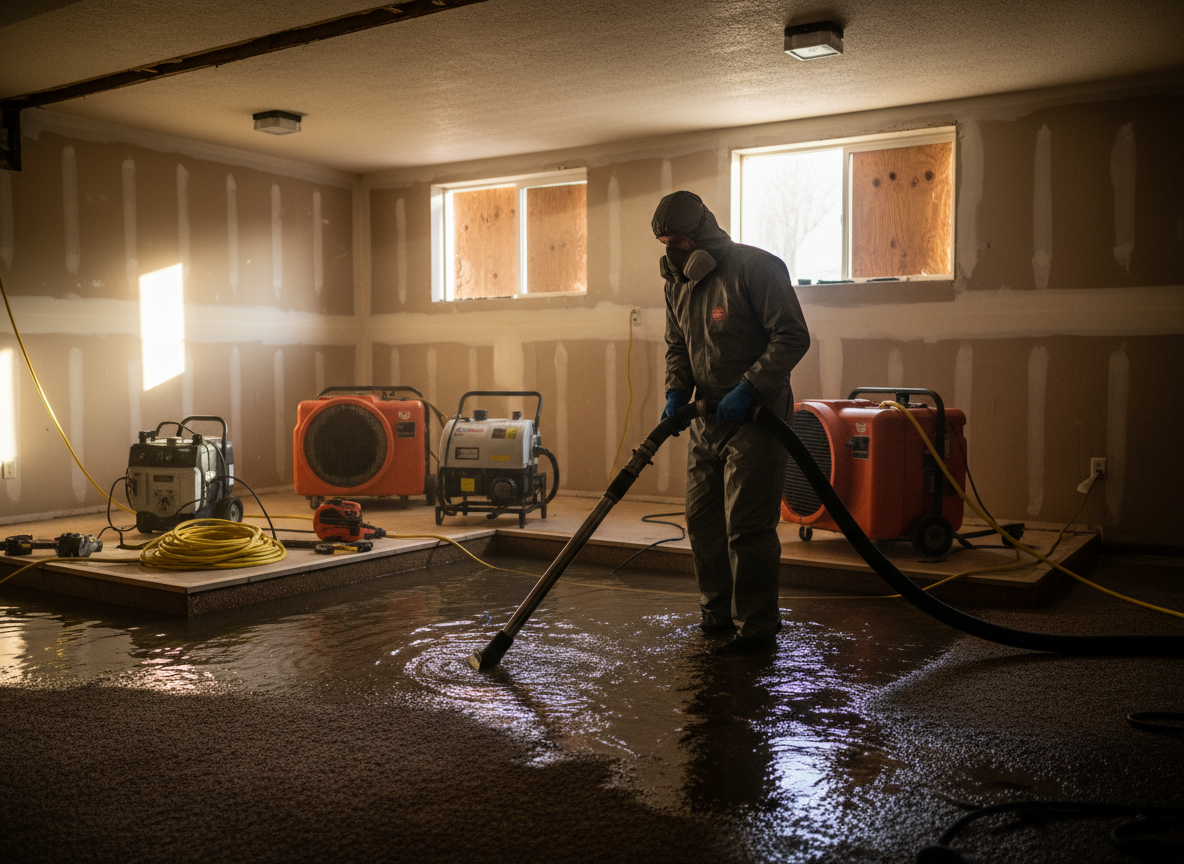
Heber City's mountain climate brings warm summers followed by heavy snow that melts into foundations each spring. Homes in Downtown Heber City and North Village often date to the early 1900s with galvanized or cast-iron supply lines that corrode from the inside. When a pinhole leak develops behind plaster or under hardwood, water travels along joists and pools in crawl spaces that sit close to the high water table near Lake Creek. Restoration crews must pull baseboards, use moisture meters on brick and lathe, and run dehumidifiers for days longer than in drier valleys because the air itself holds more moisture at this elevation.
Leaks near Jordanelle State Park or Wasatch Mountain State Park frequently involve wells and septic systems that shift with freeze-thaw cycles. Slab leaks under 1950s ranch houses in Midway Road corridors require concrete scanning before any saw cutting. Technicians document every step for Wasatch County building officials because post-1990 additions must meet current energy codes that affect how vapor barriers are reinstalled after drying. Homeowners who ignore slow drips from roof valleys on Heber Valley Railroad-facing properties often discover mold in insulation once the first warm spell arrives.
Water extraction begins with isolating the supply line at the meter, followed by removal of saturated carpet pads and drywall up to the moisture line. Air movers and desiccants run until readings drop below 12 percent on affected wood. Final steps include antimicrobial treatment on subfloors and reinstallation of base trim with expansion gaps to accommodate future movement from snow load. Crews based at 150 N Main St respond within two hours to calls from Park City commuters whose second homes sit empty during winter storms.
Technician insight
In Heber City, the thing that catches most people out with Water Leak Restoration is spring snowmelt pooling against north-facing foundations in North Village and Lake Creek homes; the water enters through old mortar joints that never dried out from the previous winter and travels under the slab before anyone notices a wet spot.
Hidden Slab Leak in North Village Ranch
A homeowner in a 1962 North Village house noticed warm floors near the laundry. Inspection found a copper line leak under the slab that had migrated toward the garage. Crew isolated the line, extracted water from the vapor barrier, and dried the subfloor over five days before patching and re-leveling the concrete. The family returned to normal use without further settlement issues.
How it works
- 1
Site Assessment
Technician maps all wet materials with infrared and pin meters, noting construction type common to Heber City homes built before 1970.
- 2
Water Removal
Pumps and extractors pull standing water from crawl spaces and basements while protecting nearby Jordanelle State Park drainage.
- 3
Drying and Monitoring
Equipment runs until moisture targets are met; daily logs track progress through Lake Creek and North Village properties.
- 4
Restoration and Repairs
Replace removed drywall, trim, and insulation; coordinate with Wasatch County permits when structural members are affected.
Pricing
Cost depends on square footage affected, depth of water migration into older plaster or slab homes, and length of drying time required during snowy months.