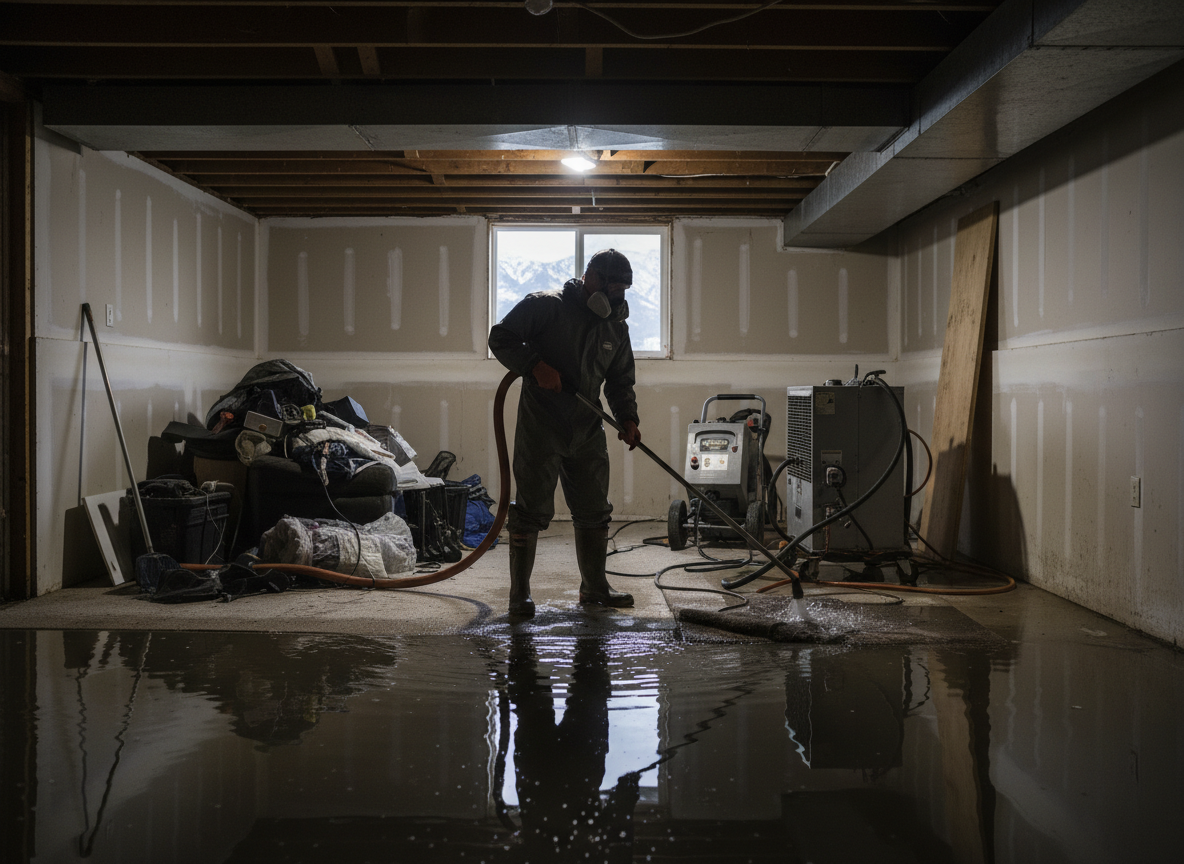
Heber City sits in a mountain climate where heavy winter snowpack melts rapidly in spring and can overwhelm drainage around older homes in Downtown Heber City and Lake Creek. Flood water often carries fine silt from nearby Jordanelle State Park slopes that settles into subfloors and wall cavities. Technicians must pull baseboards and drill weep holes early to prevent hidden mold in the tight crawl spaces common to homes built before 1980. Work in North Village properties near the Heber Valley Railroad tracks frequently requires temporary damming because the terrain funnels runoff directly toward foundations.
Water from Wasatch Mountain State Park snowmelt or sudden cloudbursts can saturate crawl spaces under Midway-adjacent homes faster than in Park City because Heber Valley soil holds more moisture. Extraction crews use truck-mounted units with 300 CFM airflow to pull water from carpet pad and hardwood before it reaches joists. After initial drying, infrared cameras check for moisture behind plaster walls that were common in 1950s builds near 150 N Main St. Homeowners who skip professional drying often see cupping floors reappear the following winter when heating systems run again.
Flood jobs here differ from standard water damage because the source water is usually Category 2 or 3 from surface runoff. Crews wear full PPE and use antimicrobial rinses on concrete slabs before reinstalling finishes. In areas near Lake Creek, crews also inspect septic systems that can back up during high water events and add extra containment barriers. Final clearance testing includes moisture readings below 12 percent on all affected wood before any reconstruction begins.
Technician insight
In Heber City the thing that catches most people out with Flood Restoration Services is how quickly snowmelt from the surrounding peaks soaks into the older crawl spaces around Downtown and Lake Creek. The silt that comes with that water hides in joist pockets and stays damp all summer if you only run fans for a week. Homeowners who wait until the next big storm to call end up replacing twice as much subfloor.
Lake Creek Snowmelt Flood
Spring runoff from Wasatch Mountain State Park pushed water under a 1960s home in Lake Creek. Extraction revealed saturated insulation and silt against the rim joists. Crews removed the wet material, dried the cavity for nine days, and treated the slab before new insulation and flooring went back in.
How it works
- 1
Emergency Assessment
Arrive on site within hours, document standing water depth, and identify affected materials in homes near Jordanelle State Park or Downtown Heber City.
- 2
Water Extraction
Remove bulk water with portable and truck-mounted pumps while protecting unaffected areas from cross-contamination.
- 3
Drying and Monitoring
Place air movers and dehumidifiers, then take daily moisture readings until levels stabilize across walls, floors, and subfloors.
- 4
Sanitizing and Clearance
Apply EPA-registered antimicrobials where needed, followed by third-party verification that the structure is dry and safe for rebuild.
Pricing
Pricing depends on water category, square footage affected, and drying time required; most flood jobs in Wasatch County are handled on insurance with an upfront deductible quote provided before work starts.