Water damage in Heber City often stems from heavy spring snowmelt around Jordanelle State Park and Wasatch Mountain State Park, pushing moisture into basements and crawl spaces of older homes in Downtown Heber City and Lake Creek. Once temperatures rise after snowy winters, trapped moisture behind drywall or under flooring quickly fuels mold colonies that standard drying misses. In North Village properties near the Heber Valley Railroad tracks, older wood-frame construction and limited ventilation make hidden growth common, requiring targeted demolition and antimicrobial treatment rather than surface cleaning alone.
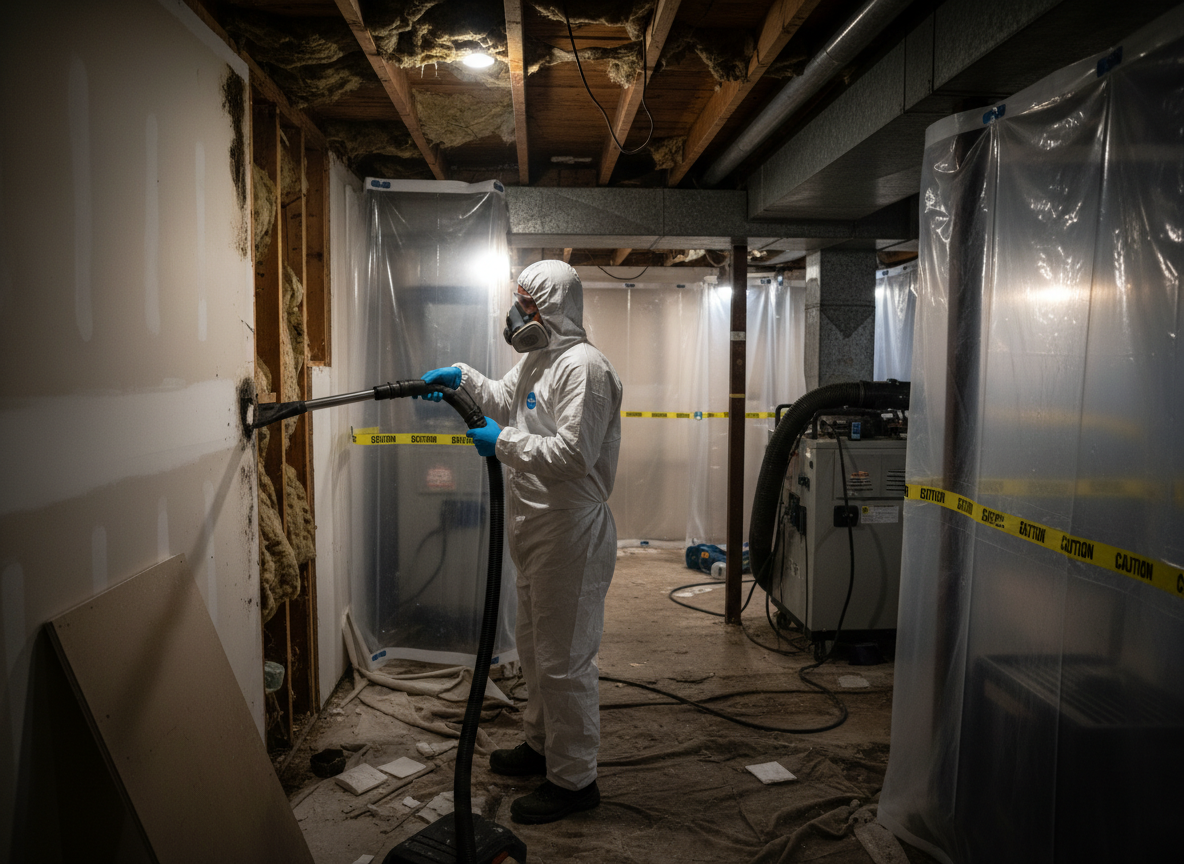
Remediation crews must account for Wasatch County's freeze-thaw cycles that repeatedly stress foundations and allow water to migrate into wall cavities. Homes built before modern vapor barriers frequently show mold extending upward from slab edges or along shared walls with unheated garages. Technicians remove affected materials to at least eighteen inches beyond visible growth, then use negative air machines and HEPA filtration to prevent spores from spreading into living spaces during Midway or Park City border jobs where wind can carry contaminants.
Post-remediation verification includes moisture meter readings below fifteen percent and air sampling to confirm spore counts match outdoor baselines. Homeowners in Lake Creek often overlook attic condensation from poor ridge venting, which reintroduces mold weeks after initial drying. Proper containment with plastic sheeting and sealed doorways keeps the process isolated, especially in compact North Village layouts where HVAC systems can quickly distribute spores if not isolated first.
Technician insight
In Heber City, the thing that catches most people out with Mold Remediation After Water Damage is how snowmelt from Wasatch Mountain State Park runs under older slab foundations in Lake Creek and Downtown homes, letting mold climb wall cavities weeks after the initial leak seems dry.
Lake Creek Basement After Spring Runoff
Heavy melt from Jordanelle State Park slopes sent water under a 1970s Lake Creek home foundation. We found mold extending three feet up interior walls behind baseboards. Containment was set, affected drywall and insulation removed, and antimicrobial applied before drying to below fifteen percent moisture. Clearance testing passed and the family returned without further issues.
How it works
- 1
Initial Assessment
Technicians inspect for hidden moisture using meters and thermal imaging in affected areas of Heber City homes, documenting extent before any removal begins.
- 2
Containment Setup
Plastic barriers and negative air pressure isolate the work zone to prevent spore migration into unaffected rooms or HVAC systems.
- 3
Material Removal
Damaged drywall, insulation, and flooring are cut out and bagged for disposal, extending beyond visible mold to reach dry substrate.
- 4
Antimicrobial Treatment
Approved solutions are applied to framing and remaining surfaces, followed by HEPA vacuuming and dehumidification until moisture levels stabilize.
- 5
Final Clearance
Post-treatment testing confirms mold levels match outdoor air, with documentation provided for insurance and future reference.
Pricing
Cost depends on square footage affected, depth of hidden growth, and whether structural materials require replacement.