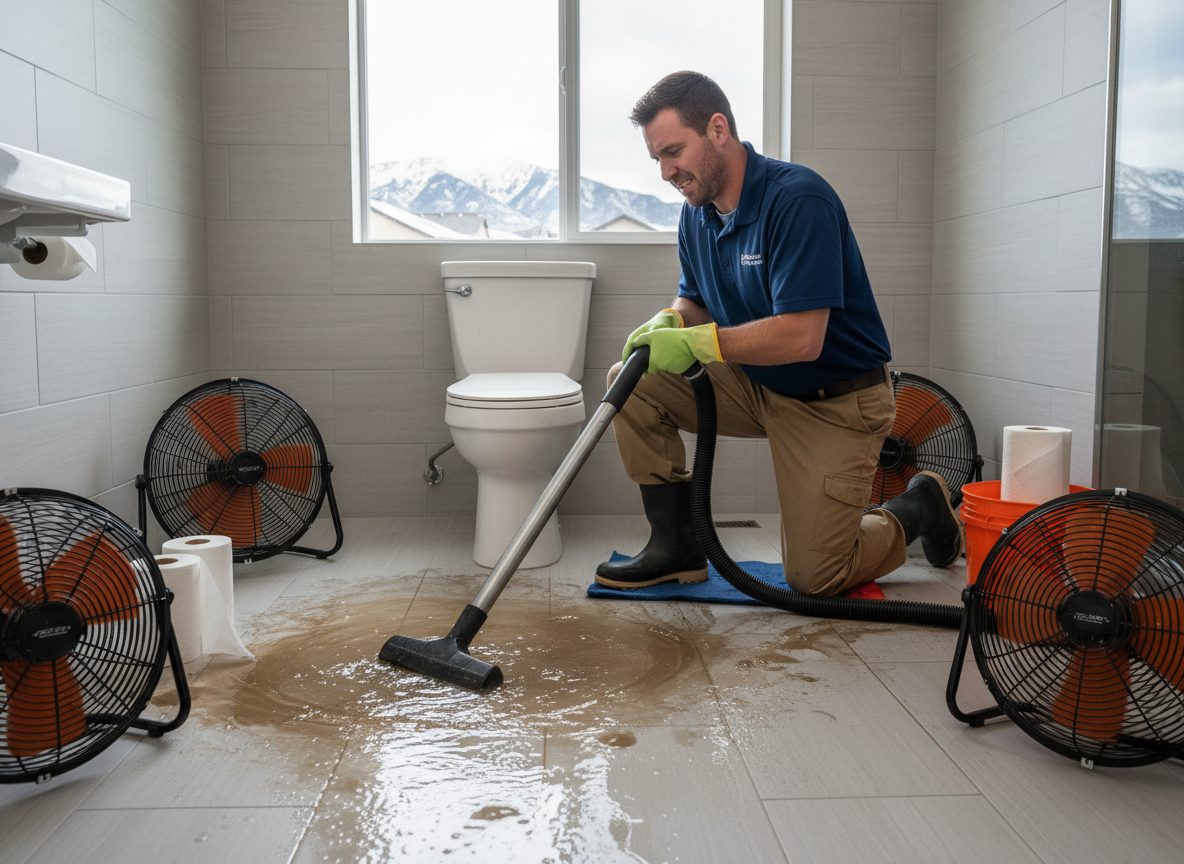
Toilet overflows in Heber City often stem from older cast-iron or galvanized lines common in Downtown Heber City homes built before 1970. When waste water backs up, it quickly saturates hardwood floors and seeps into the crawl spaces typical of Lake Creek properties. Mountain winters bring freeze-thaw cycles that crack aging pipes, turning a simple clog into widespread contamination that requires full removal of affected subflooring rather than surface drying alone.
In North Village and Midway-adjacent neighborhoods, many homes sit on sloped lots where water migrates toward foundations. A single overflow can push contaminated water under baseboards and into wall cavities within minutes. We isolate the affected zone, extract standing water with truck-mounted units, then use moisture meters to confirm drywall and insulation are fully dry before any reconstruction begins. Skipping this step leads to hidden mold growth during the warm summer months when humidity spikes near Jordanelle State Park.
Wasatch County code requires proper disposal of biohazard water; we bag and haul saturated materials to approved facilities rather than leaving them on site. Homeowners along the Heber Valley Railroad corridor frequently report overflows after heavy spring runoff overwhelms municipal lines. Our crews carry extra containment barriers for these events to protect adjacent rooms and prevent cross-contamination through shared plumbing stacks in multi-unit buildings.
Technician insight
In Heber City, the thing that catches most people out with Toilet Overflow Cleanup is older homes in Downtown Heber City and Lake Creek where the original cast-iron stacks run under the slab. Snowmelt in spring pushes extra water into those lines and one overflow can travel under the entire kitchen before anyone notices.
Overflow in North Village Cabin
A homeowner in North Village returned from Park City to find water across the main floor after a toilet overflow. We traced the water under the subfloor into the crawl space common in that neighborhood. Extraction and targeted drying prevented mold growth before the next freeze cycle set in.
How it works
- 1
Arrival and Containment
Technicians reach the property within the hour, set up containment barriers, and stop the source of the overflow.
- 2
Water Extraction
Standing water and waste are removed using commercial-grade pumps and wands suited for contaminated liquid.
- 3
Moisture Mapping
Infrared cameras and meters locate hidden moisture in floors, walls, and under cabinets throughout the affected rooms.
- 4
Drying and Sanitation
Air movers, dehumidifiers, and EPA-registered antimicrobials treat all contacted surfaces until dry standards are met.
- 5
Final Verification
Post-drying inspection confirms moisture levels match unaffected areas before any rebuild work begins.
Pricing
Cost depends on square footage affected, depth of saturation, and whether structural materials must be removed.