In Wasatch County mountain homes, especially older stock around Downtown Heber City and Lake Creek, water intrusion often travels behind plaster walls and under hardwood floors installed decades ago. Snow loads from heavy winters push meltwater through roof valleys and foundation cracks once temperatures rise in spring. Mitigation crews must isolate HVAC returns quickly because mountain air holds less moisture yet still allows hidden mold colonies to form in crawl spaces beneath North Village cabins.
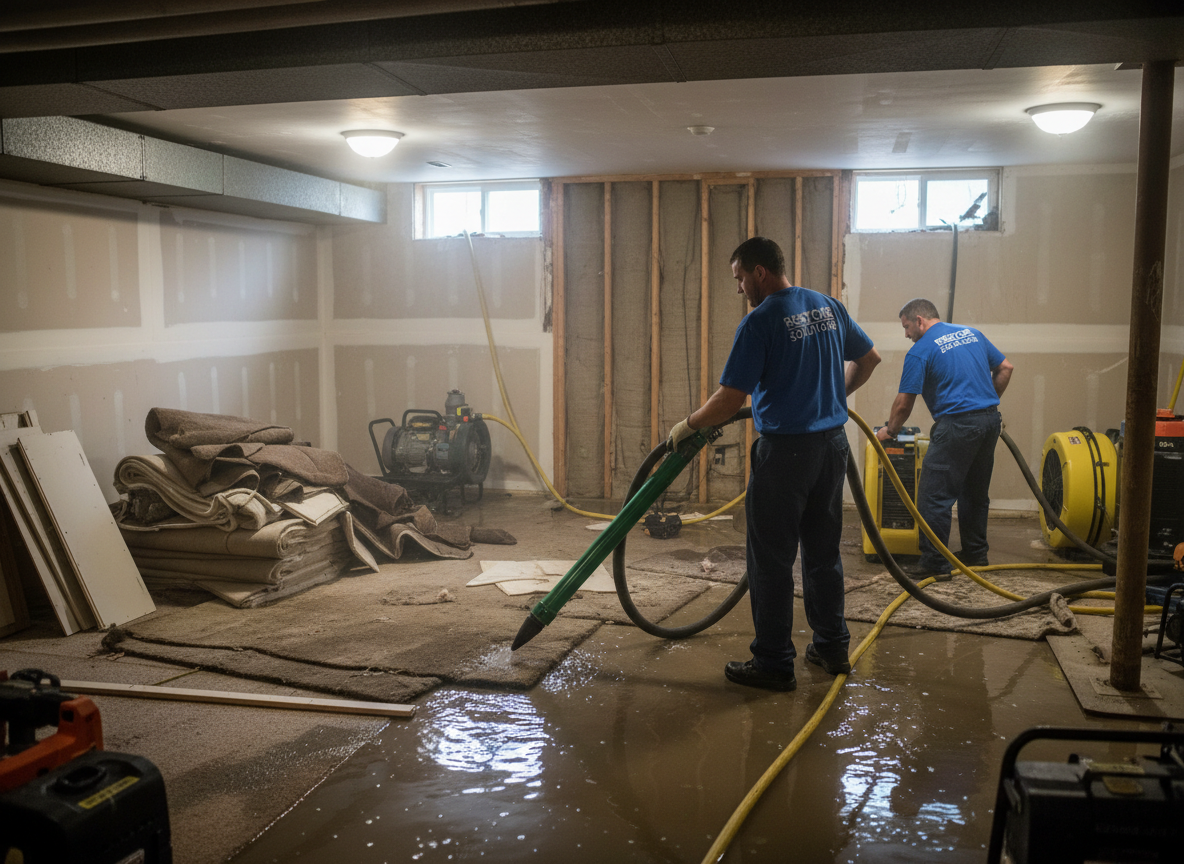
Extraction equipment must handle both high-volume liquid from summer thunderstorms near Wasatch Mountain State Park and slow seepage from ice-dam failures common after January storms. Technicians place air movers and dehumidifiers in patterns that account for the tight floor plans typical of 1970s-1990s builds between Heber City and Midway. Failure to pull baseboards on the first visit frequently leaves saturated insulation against exterior logs, requiring later demolition that could have been avoided.
Electrical shutoff precedes any drying work because many Heber City properties still rely on knob-and-tube wiring that shorts when base plates absorb water. Containment barriers go up before negative air machines run to keep construction dust from migrating into living areas near the Heber Valley Railroad corridor. Final moisture readings target below 12 percent on dimensional lumber to match local code expectations for Wasatch County inspections.
Technician insight
In Heber City the thing that catches most people out with Water Damage Mitigation is spring snow melt seeping under older foundations in Downtown Heber City and North Village; homeowners often stop at surface cleanup and miss how the clay-heavy soil here keeps moisture trapped against sill plates for weeks.
Lake Creek Cabin After Pipe Burst
A supply line split under a Lake Creek home during a January freeze. We found water had wicked into subfloor insulation and traveled under the living room toward the exterior logs. Extraction and targeted drying prevented structural rot; the owners returned to dry floors within ten days.
How it works
- 1
Emergency Assessment
Technicians arrive within hours, map moisture with meters, and identify the water source in homes near Jordanelle State Park or Lake Creek.
- 2
Water Extraction
Standing water is removed using truck-mounted pumps suited to the volume typical after Wasatch County spring melt or pipe bursts.
- 3
Drying and Monitoring
Industrial dehumidifiers and air movers run while daily readings track progress through walls and subfloors in North Village properties.
- 4
Sanitization and Containment
Antimicrobial treatment follows extraction to prevent bacterial growth common in mountain climate conditions.
Pricing
Upfront quotes follow inspection; final cost depends on affected square footage, water category, and drying duration required by local conditions.